Featured
Table of Contents
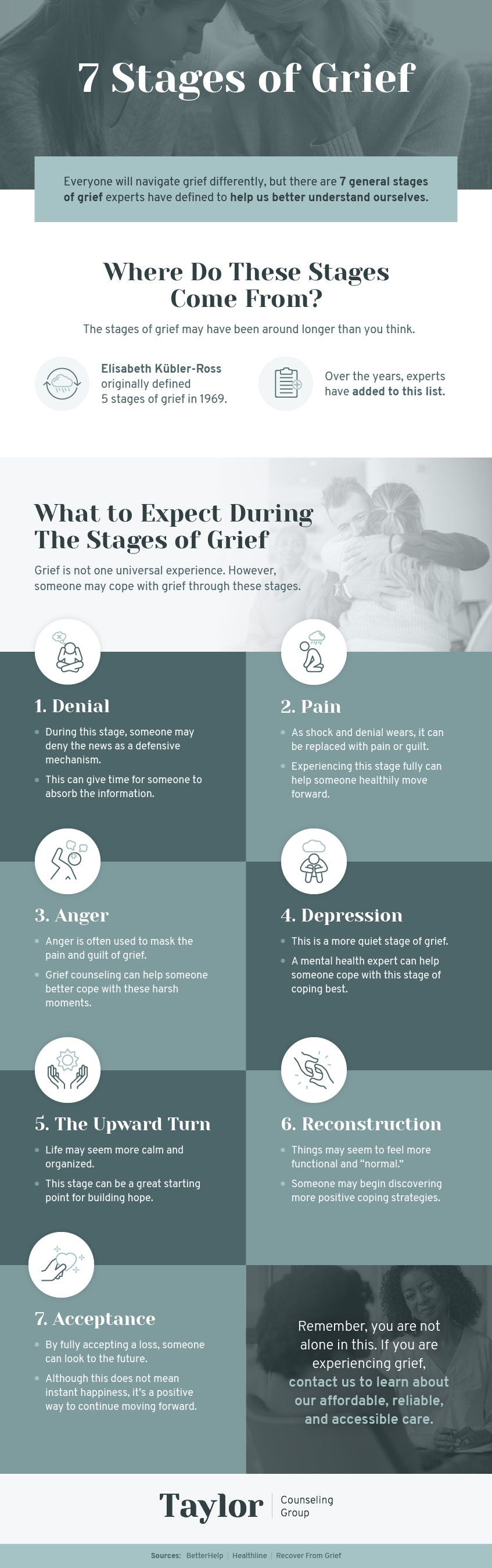
Throughout this stage, you begin to readjust to life without your enjoyed one. Practical matters, such as job, obligations, and future strategies, become even more of an emphasis. While sorrow is still existing, it no more controls every aspect of life. Acceptance does not mean neglecting or moving onit ways discovering a means to cope with the loss.
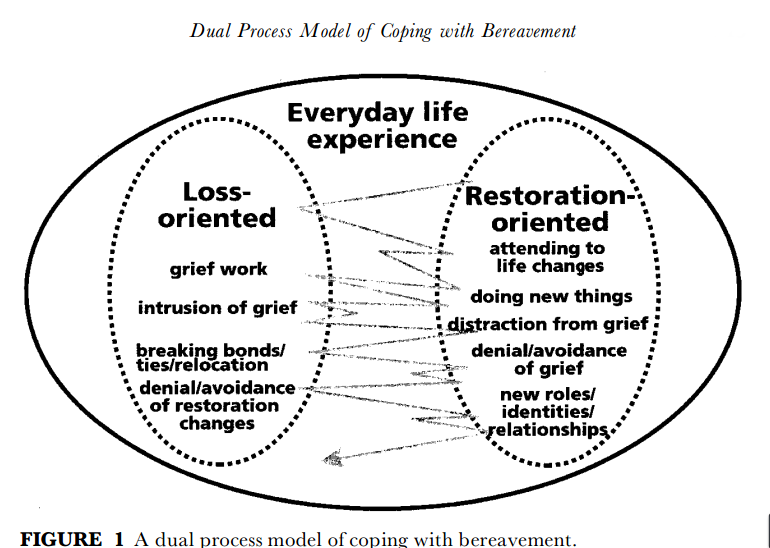
Rather, it is a fluid experience, marked by waves of emotion that come and go. You refine loss, understand that your trip is unique, and there is no incorrect means to regret.
In, we analyze this structure alongside a more adaptable, customized method, permitting you to explore what genuinely aligns with your experience. The "stages" of despair are one of individuals turn to when attempting to understand loss yet they're commonly. Our Stages of Grief overview breaks down where the version, what each, and without suggesting sorrow moves in neat steps.
Attachment Healing for Healthcare Workers Through Therapy in Sacramento
You just went via a break up. You shed your job. You're not able to acquire the objective you've been functioning towards. Believe it or not, all of these are some form of sorrow or the experience of dealing with loss. As we work our way via experiences like these, we're most likely to undergo different phases or feelings from rejection and rage to sadness and resentment.
Before we dive right into the 5 stages of grief, it's practical to understand what despair is. Simply placed, despair is the experience of coping with loss.
Career Alignment After PTSD Treatment
Despair can additionally come from any type of adjustments we experience in life, such as relocating to a new city or school or transitioning into a new age group. The reality is that most of us experience a certain level of grief throughout our lives. While some losses are extra intense than others, they are no less genuine.
Many researchers have actually committed years to examining loss and the feelings that accompany it. One of these experts was Elisabeth Kubler-Ross, a Swiss-American psychoanalyst. She talked to over 200 individuals with terminal diseases and determined 5 common phases individuals experience as they grapple with the realities of their upcoming death: denial, anger, bargaining, clinical depression, and acceptance.
Although Kubler-Ross's work concentrated on despair responses from individuals that are dying, a number of these stages can be related to sorrow throughout any type of kind of loss. It is very important to keep in mind that these stages are not linear, and they're not a prescription. Not everyone experiences every phase, which's alright. We might really feel like we accept the loss sometimes and then relocate to an additional stage of despair once more.
Just how much time we invest browsing these stages differs from individual to individual. It may take us hours, months, or longer to process and recover from a loss. With that said in mind, let's take a closer consider each of the 5 phases of grief: For lots of people, denial or acting the loss or adjustment isn't occurring is typically the very first feedback to loss.
Recognizing Complex Trauma in High-Functioning Individuals
At some point, when we're grieving, we can start the healing process by enabling the feelings and feelings we've denied to resurface. Lots of people will certainly also experience anger as component of their pain. According to Kubler-Ross, discomfort from a loss is commonly rerouted and shared as anger. Simply put, anger is a means to hide the lots of emotions and discomfort that we're lugging as an outcome of the loss or adjustment.
Also though our reasonable brain understands they're not to condemn, our feelings are extreme and can conveniently bypass logical reasoning. While we usually think that rage is an unfavorable feeling and something to be stayed clear of at all expenses, it in fact offers an objective and is an essential part of healing.
Bargaining is a phase of grief that helps us keep hope during extreme psychological pain. It's an effort to help us reclaim control of a circumstance that has actually made us feel incredibly prone and powerless. It's likewise another way to help us hold off needing to deal directly with the sadness, complication, or hurt.
Depression is often compared to the "quiet" stage of pain, as it's not as active as the rage and bargaining stages. This can bring about extreme feelings of unhappiness, misery, and sadness. Signs of anxiety can manifest themselves in different means. For circumstances, we might feel clouded, heavy, fatigued, baffled or distracted.
Co-Regulation in the Therapeutic Process for High-Achievers
Simply like the other phases of pain, anxiety is experienced in different methods. Instead, it's a natural and suitable response to pain.
Rather, For example, if we're regreting the death of an enjoyed one, we may be able to reveal our thankfulness for all the terrific times we invested with them. Or if we're undergoing a breakup, we might state something like, "This truly was the most effective point for me." In this stage, we might become extra comfy connecting to friends and family, and we could even make brand-new partnerships as time goes on.

This doesn't imply we'll never ever have another hard time. Since our feelings are much more stable in this stage, we understand that we're going to be ok in the great days and the negative. Although these 5 phases of despair can assist us recognize the grieving process, Sometimes people battle because they feel that their mourning process isn't "the standard," however pain is a very complex experience that varies from person to person.

Table of Contents
Latest Posts
Acknowledging Symptoms of Intergenerational Trauma Through Therapy for Guilt and Shame
Processing Sensitivities and Their Influence on Daily Functioning
Nervous System Bandwidth: Building Your Ability Through Therapy
More
Latest Posts
Acknowledging Symptoms of Intergenerational Trauma Through Therapy for Guilt and Shame
Processing Sensitivities and Their Influence on Daily Functioning
Nervous System Bandwidth: Building Your Ability Through Therapy